Yuksom: A Local Travel Guide to Our Village
Yuksom is a small village in Gyalshing district, West Sikkim, situated at an altitude of approximately 1,780 metres. Surrounded by forests and mountains, it is one of the most historically important places in Sikkim.
In 1642, Phuntsog Namgyal was crowned the first Chogyal (king) of Sikkim at Norbugang. This marked the beginning of the Namgyal dynasty and gave Yuksom an important place in Sikkim’s history.
Today, Yuksom is also known as the starting point for some of Sikkim’s popular trekking routes, including the Dzongri and Goechala treks. Every year, trekkers from India and other countries visit this village before heading into Khangchendzonga National Park.
However, there is more to Yuksom than trekking. You can visit old monasteries, explore forest paths, see waterfalls and experience village life. Even if you are not planning a trek, spending two or three days here can be worthwhile.
There are a few practical things to know before arriving. Transport connections are limited, there is no reliable ATM, and some local kitchens need advance notice to prepare meals.
Having a little information beforehand will make your visit easier. This guide covers the places to visit, accommodation, food, transport and other useful details to help you plan your stay in Yuksom.
How Many Days Should You Spend in Yuksom?
The time you need depends on your interests.
- 1 night: Visit Norbugang, Kathok Lake and explore the village.
- 2–3 nights: Explore Dubdi Monastery, nearby waterfalls, Tashiding and the surrounding countryside.
- 4–5 days: Allow this approximate duration for a Dzongri trekking itinerary.
- 7–9 days: Allow approximately 7–9 days for a Goechala trekking itinerary, depending on the route and acclimatisation plan.
If you are visiting only for sightseeing, two nights are a good starting point. You will have enough time to explore without rushing.
1. Where Is Yuksom?
Yuksom is located in western Sikkim, in Gyalshing district. It is approximately 150-170km from Bagdogra Airport/NJP, 33–35 km from Pelling and around 45 km from Gyalshing.
The village is an important gateway to Khangchendzonga National Park.
Many travellers include Yuksom in their West Sikkim itinerary along with Pelling, Tashiding and Khecheopalri Lake.
If you enjoy history, monasteries, nature walks and mountain surroundings, Yuksom is a good place to include in your Sikkim holiday.
2. Where to Stay in Yuksom
Yuksom has several accommodation options, including hotels, homestays and smaller family-run properties.
Most places are independently operated. You can find simple rooms as well as more comfortable accommodation with attached bathrooms and meal facilities.
Before booking, confirm the following:
- Is hot water available? Is it provided through a geyser or bucket?
- Does the room have an attached bathroom?
- Is Wi-Fi available?
- Is parking available?
- Can the kitchen prepare breakfast and dinner?
- Can they arrange vegetarian meals or accommodate food allergies?
March–May and September–November are popular trekking periods, so booking in advance is advisable.
If you have a particular homestay in mind, contact the owner directly to confirm availability and facilities.
3. Food in Yuksom: What Can You Expect?
Food options in Yuksom are relatively simple. You will find small restaurants and homestay kitchens serving local and Indian dishes.
Commonly available options include:
- Momos
- Thukpa
- Chowmein
- Tea and snacks
- Roti and vegetables
- Dal, rice and seasonal vegetables
If you want a proper meal such as dal bhat and nonveg items, it is better to inform your homestay in advance.
Many local kitchens prepare meals according to the number of guests rather than keeping everything ready throughout the day.
For dinner, try informing your host in an advance about what you would like to eat. This gives the kitchen time to arrange the ingredients and prepare your meal.
If you have dietary restrictions or food allergies, let your accommodation know before arriving.
Do not expect a large choice of restaurants or café-style dining. Food options are limited compared with bigger tourist towns.
4. How to Reach Yuksom
The nearest airport for most travellers is Bagdogra Airport (IXB), while New Jalpaiguri (NJP) is the nearest major railway station.
From both locations, you need to continue by road.
Approximate distances and travel times are:
| Starting point | Approx. distance | Travel time |
|---|---|---|
| Bagdogra Airport | 150 km | 6–8 hours |
| NJP Railway Station | 146 km | 6–8 hours |
| Siliguri | 150–170 km | 6–8 hours |
| Pelling | 33–35 km | 1–1.5 hours |
| Gyalshing | Around 45 km | Around 2 hours |
| Gangtok | 135–150 km | 5–6 hours |
These are approximate figures. Actual journey time depends on the route, road conditions, traffic and weather.
Route via Jorethang:
Siliguri → Melli Check post→ Jorethang → Legship → Tashiding → Yuksom.
Route via Pelling:
Siliguri → Melli Check post→ Jorethang → Legship → Gyalshing → Pelling → Darap → Yuksom.
The second route is useful if you want to visit Pelling before continuing to Yuksom.
For travelers arriving at Bagdogra or NJP, hiring a private vehicle is generally the more convenient option, especially for foreign visitors. Foreign travelers must stop at Melli Check Post to complete the Restricted Area Permit (RAP) formalities before continuing to Yuksom.
5. Shared Transport to Yuksom
Shared jeeps are available for travelling towards Yuksom, but services are very limited compared with larger towns.
Travellers should not assume that a vehicle will be available whenever they reach a taxi stand.
You can travel from Siliguri to Yuksom directly or Siliguri towards Jorethang and then look for onward transport to Yuksom. Another option is to travel via Gyalshing.
If you are planning to use shared transport:
- Confirm departure timings with local drivers beforehand.
- Ask whether the service is operating on your travel date.
- Allow sufficient time between connections.
- Carry cash for the journey.
- Check road conditions during the monsoon.
Missing the last connecting vehicle can mean staying overnight in an intermediate town.
For families, groups and travellers with a fixed itinerary, a private vehicle is usually more convenient.
6. Local Taxis and Sightseeing
Yuksom is a small village, and local taxi availability is limited. You will not find a large taxi stand with vehicles waiting throughout the day.
If you want to visit places such as Kanchenjunga Falls or Tashiding Monastery, arrange a vehicle through your hotel or a local operator.
It is better to discuss your sightseeing plans the previous evening.
Some attractions within Yuksom, including Norbugang and Kathok Lake, can be explored on foot.
7. Places to Visit in Yuksom
Yuksom has several historical and natural attractions. Most can be explored without undertaking a difficult trek.
Norbugang Coronation Throne
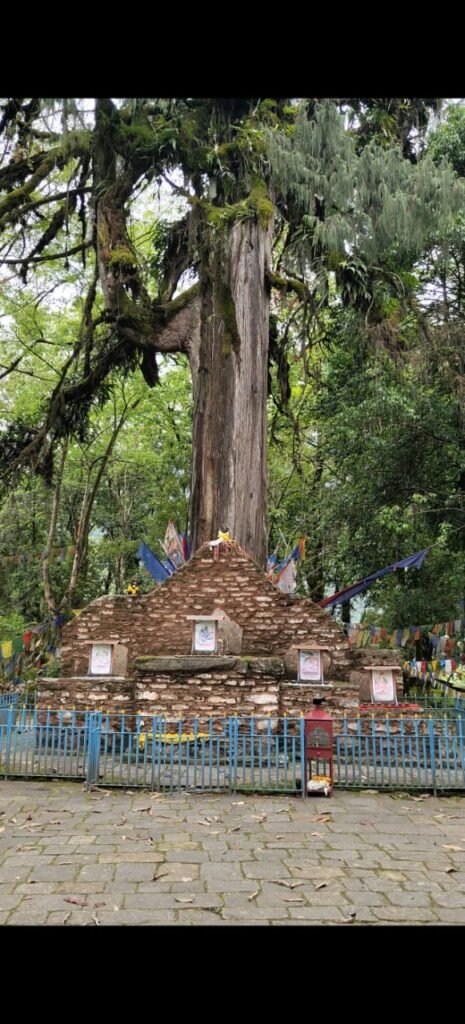
Norbugang is one of the most important historical sites in Sikkim.
This is where Phuntsog Namgyal was crowned the first Chogyal of Sikkim in 1642. The site contains a stone throne, a chorten and other features associated with the coronation.
It is a peaceful place surrounded by trees and is worth visiting even if you are staying in Yuksom for only one day.
Kathok Lake
Kathok Lake is a small sacred lake located within the village.
It is associated with the early history of Sikkim and is an important religious place for the local community.
You can visit it during a village walk. Take some time to enjoy the peaceful surroundings.
Dubdi Monastery
Dubdi Monastery was established in 1701 and is regarded as the oldest surviving monastery in Sikkim.
The monastery is located on a hill above Yuksom. Reaching it requires an uphill walk through a forest trail.
Allow approximately 30–45 minutes or more for the climb, depending on your walking speed.
The monastery and surrounding forest make this a worthwhile visit for anyone interested in Sikkim’s Buddhist history.
Wear comfortable shoes and carry drinking water. The uphill walk can be tiring if you are not used to walking on mountain trails.
Kanchenjunga Falls
Kanchenjunga Falls is one of the popular waterfalls visited by travellers in the Pelling and Yuksom region.
It is a large waterfall surrounded by green hills and is a good place for photography.
You can visit it by vehicle from Yuksom as part of a sightseeing trip.
Famrong Falls
Famrong Falls is another waterfall in the wider West Sikkim region.
Before visiting, check the current road and walking access with your accommodation or local driver. Access conditions can change depending on the season.
Tashiding Monastery
Tashiding Monastery is one of the important Buddhist monasteries in Sikkim.
It is situated on a hill overlooking the surrounding valleys and the Rathong Chu region.
The monastery is known for its religious significance and peaceful surroundings.
You can reach the area by road and explore the monastery grounds on foot.
A visit to Tashiding can be combined with other sightseeing stops around West Sikkim.
8. Walking and Short Hikes Around Yuksom
You do not need to undertake a multi-day trek to enjoy the natural surroundings of Yuksom.
Some options include:
- Walking around Norbugang and Kathok Lake.
- The uphill forest walk to Dubdi Monastery.
- Exploring the village lanes.
- Short nature walks in the surrounding forest areas.
If you are interested in birdwatching, consider arranging a local guide who knows the surrounding forests and bird species.
For longer or unfamiliar forest routes, check the trail conditions and arrange appropriate local guidance.
9. Mobile Network and Internet in Yuksom
Mobile network coverage in Yuksom can vary depending on your service provider and exact location.
Some areas may have better reception than others, and internet speeds may not always be consistent.
If you are travelling from outside Sikkim, check whether your mobile connection works in the region before depending on it for navigation or communication.
Prepaid and postpaid connection rules and network availability can differ. Confirm the current position with your mobile operator rather than assuming your SIM will work.
Some hotels and homestays provide Wi-Fi, but the speed and reliability vary.
It is a good idea to download offline maps before leaving Siliguri or Gangtok and save important accommodation and transport contact numbers.
10. Money and ATMs: Carry Cash
One important thing travellers should know is that Yuksom does not have a reliable ATM facility.
Withdraw enough cash before reaching the village. You can arrange your cash requirements in Siliguri, Gangtok or Gyalshing.
Keep sufficient cash for meals, local transport, shopping and unexpected expenses.
Do not arrive expecting to withdraw money whenever you need it.
11. Medical Facilities in Yuksom
Yuksom has a Primary Health Centre (PHC) for basic medical assistance.
However, travellers should not expect the same facilities available in a larger hospital.
For serious medical conditions, further treatment may require travelling to a larger town like Gayzing, Namchi or Gangtok.
If you are visiting Yuksom, especially before a trek, carry your personal medicines and a basic first-aid kit.
For trekking, travel insurance that covers high-altitude activities and emergency evacuation is worth considering.
If you require regular medication, bring enough supplies for your entire trip.
12. Fuel Availability
There is no petrol pump in Yuksom.
Travellers driving their own vehicles should plan their fuel requirements before reaching the village.
Refuel in jorthang, Gyalshing, Tashiding or Darap before continuing towards Yuksom.
If you are hiring a vehicle for sightseeing or airport transfers, confirm the arrangements with your driver in advance.
13. Shops and Supplies
Yuksom has small general stores where you can purchase everyday items.
You will usually find basic groceries, biscuits, snacks, drinks, soap and some household necessities.
However, the selection is limited compared with Siliguri or Gangtok.
If you need a particular brand of toiletries, sunscreen, medicines or trekking equipment, purchase it before arriving.
14. Electricity and Charging
Electricity is generally available in Yuksom, although interruptions can happen, particularly during bad weather.
Most accommodation providers have charging facilities, but the number of electrical sockets can vary between properties.
Carrying a power bank is a good idea, especially if you are planning to continue into the mountains for trekking.
15. Drinking Water
Plastic water bottles are restricted in Sikkim. However, 2-litre bottles may sometimes be available in local shops.
Some homestays and hotels can provide drinking water for guests.
If you are using tap water or water from natural sources, do not assume it is safe to drink without treatment.
Boil or properly purify untreated water before drinking.
If you are trekking, carry a reusable bottle and a suitable water purification method.
16. Toilets and Hot Water
Most hotels and tourist accommodation in Yuksom provide private toilets.
However, facilities differ between properties, particularly in smaller homestays.
Hot water may be available through a geyser or by bucket, depending on the accommodation.
Before booking, confirm whether the bathroom is attached, which type of toilet is available and what arrangements are made for hot water.
17. Parking in Yuksom
Many hotels and homestays have parking facilities, but available space depends on the property.
Some accommodation is located along narrow village lanes where parking space is limited.
If you are travelling with your own vehicle, confirm parking availability before booking.
18. Best Time to Visit Yuksom
Yuksom can be visited throughout the year, but each season offers a different experience.
| Months | What to expect |
|---|---|
| March–May | Spring greenery, flowering plants and trekking activity |
| June–August | Monsoon rainfall and possible road disruptions |
| September–November | Post-monsoon scenery and popular trekking season |
| December–February | Cold weather, quieter village and winter scenery |
March to May: A good period for travellers who enjoy greenery, flowers and outdoor activities. It is also a popular trekking season.
June to August: Heavy rainfall can affect roads and sightseeing plans. Keep extra days in your itinerary if travelling during the monsoon.
September to November: A popular time to visit Yuksom, with generally clearer mountain views after the monsoon.
December to February: Winter is quieter and colder. Carry proper warm clothing and check local weather and road conditions.
If you are planning a Goechala or Dzongri Trek, check the current trekking conditions before finalising your dates.
19. People and Local Life in Yuksom
Yuksom is home to different communities, including Bhutia, Lepcha, Limboo, Rai, Gurung, Chettri and Sherpa families.
Tourism and trekking provide an important source of livelihood for many local families. People are involved in homestays, restaurants, transport, guiding, porter services and other tourism-related work.
If you have time, take a walk around the village and experience daily life rather than spending your entire visit inside your hotel.
20. Shopping in Yuksom
Yuksom is not a major shopping destination, so do not expect large souvenir shops or shopping markets.
Dalle khorsani, the famous local chilli, is one product worth looking for. You may find it fresh or in the form of pickle, depending on the season and availability.
Local vegetables, fruits and homemade products may also be available from village shops or households.
Availability changes throughout the year, so ask locally if you are looking for something specific.
21. Photography and Local Etiquette
Yuksom has plenty of beautiful places for photography, including monasteries, forests, village paths and mountain surroundings.
However, some places are religiously important to the local community.
A few simple guidelines will help you enjoy your visit respectfully:
- Ask permission before photographing local people.
- Check with the caretaker before taking photographs inside monasteries.
- Avoid disturbing prayers and religious activities.
- Dress respectfully when visiting sacred places.
- Do not leave plastic or other waste around lakes, monasteries or forest paths.
22. Trekking from Yuksom: Goechala and Dzongri
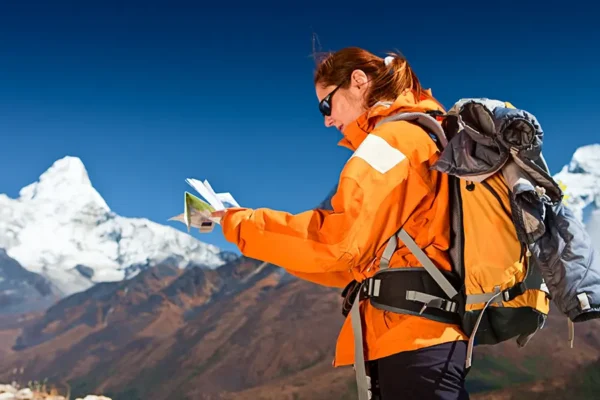
Yuksom is one of the most important trekking starting points in Sikkim.
Two well-known trekking routes from the village are the Dzongri Trek and the Goechala Trek.
Both take you into the beautiful surroundings of Khangchendzonga National Park.
Dzongri Trek
The Dzongri Trek is a popular option for travellers who want to experience the high mountains of Sikkim without undertaking the longer Goechala route.
The trek passes through forests, mountain landscapes and beautiful viewpoints.
Depending on the itinerary, it generally takes around 4–5 days.
Goechala Trek
The Goechala Trek is one of the most recognised high-altitude trekking routes in Sikkim.
Starting from Yuksom, the route passes through places such as Sachen, Tshoka, Dzongri, Kokchurung, Thangsing and Lamuney before reaching the Goechala viewpoint area.
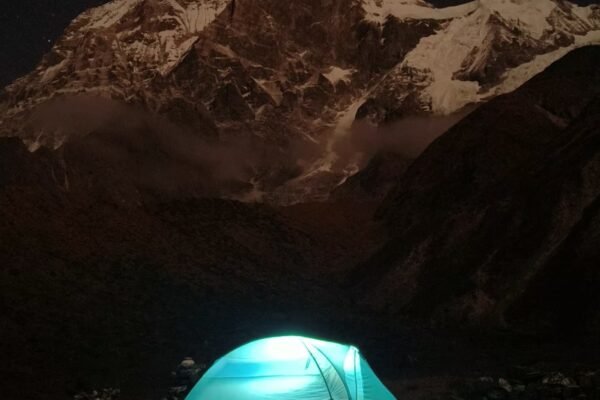
The trek offers magnificent views of some of the highest peaks in the Sikkim Himalayas, including Mount Khangchendzonga (8,586 m), Mount Kabru North (7,353 m), Mount Kabru South (7,318 m), Mount Pandim (6,691 m), Mount Rathong (6,679 m), Mount Simvo (6,812 m) and Mount Koktang (6,147 m).
A typical itinerary takes approximately 7–9 days, depending on the route, acclimatisation plan and weather conditions.
If you are planning this trek, read our detailed Goechala Trek Guide and Package for information about the itinerary, inclusions, preparation and booking.
Trekking Guides and Local Support
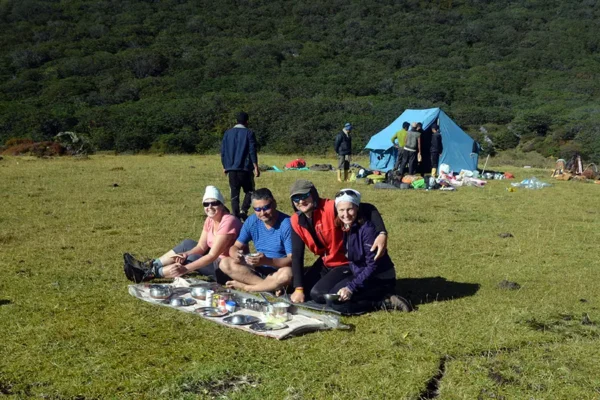
For Goechala and Dzongri, arrange your trek through an authorised trekking operator.
A proper trekking arrangement should include the required permits and registrations, a suitable guide, necessary camping equipment and emergency planning.
Local operators can also arrange porters, camping support and other services depending on your requirements.
For shorter nature walks and birdwatching, you can ask local operators about arranging a guide who knows the surrounding forests and wildlife.
Permits for Goechala and Dzongri
Trekking in Khangchendzonga National Park involves specific entry and registration procedures.
Requirements differ for Indian and foreign visitors. Foreign travellers should check the latest Sikkim entry requirements and protected-area permit rules before travelling.
For Goechala and Dzongri, speak to a registered local trekking agency about the current permit process and required documents.
You can also read our detailed Sikkim Entry and Trekking Permit Guide before planning your journey.
Do not leave permit arrangements until the last minute.
23. How Much Does a Visit to Yuksom Cost?
The cost of visiting Yuksom depends on your accommodation, food preferences, transport and sightseeing plans.
Travellers using shared transport and staying in simple homestays can keep their expenses lower. Those hiring private vehicles and choosing more comfortable accommodation will naturally spend more.
Before travelling, consider these expenses:
| Expense | What to consider |
|---|---|
| Accommodation | Homestay or hotel, room type and facilities |
| Food | Breakfast, lunch, dinner and snacks |
| Transport | Shared jeep or private vehicle |
| Sightseeing | Local taxi and applicable entry charges |
| Other expenses | Shopping, personal supplies and emergencies |
Trekking expenses are separate from an ordinary sightseeing visit. Guide services, permits, camping equipment, food, porters and transport can all affect the final cost.
It is better to request a detailed quotation based on your group size and preferred itinerary.
Final Thoughts: Is Yuksom Worth Visiting?
Yuksom is worth visiting even if you are not planning a trek.
It has an interesting history, peaceful monasteries, beautiful natural surroundings and opportunities to explore village life at your own pace.
It is a small mountain village rather than a developed tourist town. Transport connections are limited, cash facilities are not readily available, and the choice of restaurants and shops is smaller than in bigger towns.
A little planning before arrival will make your stay easier.
Carry enough cash, confirm your transport, arrange accommodation in advance during busy seasons and give yourself enough time to explore.
And if you are planning the Goechala or Dzongri Trek, your journey into the mountains begins here in Yuksom.