
- 1
Nepal offers mountain journeys on a remarkable scale, but its appeal reaches far beyond trekking. The streets and courtyards of the Kathmandu Valley are filled with temples, traditional architecture, busy markets and everyday neighbourhood life. Travelling between these places is as much about understanding local culture as it is about seeing famous landmarks.
Pokhara offers a different beginning. Set beside Phewa Lake with the Annapurna mountains to the north, it is a natural place to slow down before or after a journey into the hills. Lakeside walks, viewpoints and nearby villages give travellers plenty to enjoy without committing to a high-altitude expedition. For those heading into the mountains, the city is also an important gateway.
The Annapurna region has routes for very different interests and abilities. The Annapurna Base Camp Trek heads through villages and forested valleys towards a high mountain sanctuary surrounded by peaks. The Annapurna Circuit follows a broader route around the massif, crossing contrasting landscapes and, on many itineraries, a demanding high pass. These are separate treks, not two names for the same holiday. The right choice depends on available time, walking experience and comfort with altitude.
Nepal's other regions invite slower exploration too. Travellers may choose heritage walks, village stays, scenic road journeys or wildlife experiences in the lowlands. Each has its own pace, and distances on a map rarely tell the full story of mountain travel.
Spring and autumn are popular periods for trekking, while monsoon rain and winter conditions call for more careful route planning. A good Nepal itinerary should give enough time for travel, rest and changes in weather. Explore the destination with an open mind, and choose between cultural touring and a particular trekking route before deciding how many days to set aside.
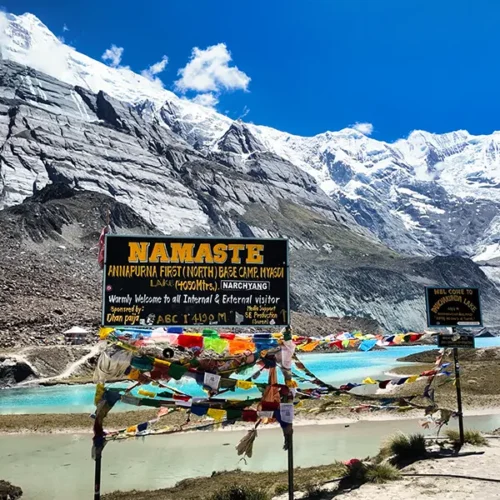
Annapurna Base Camp Trek in Nepal: a guided Pokhara-to-Pokhara route to 4,130 m via Ghandruk, Chhomrong, Deurali and Machhapuchhre Base Camp. Explore the itinerary, cost, difficulty, permits and seasons.
Duration
10 Days
₹69,999
Next Departures
November 6, 2026 (Available)November 7, 2026 (Available)November 8, 2026 (Available)