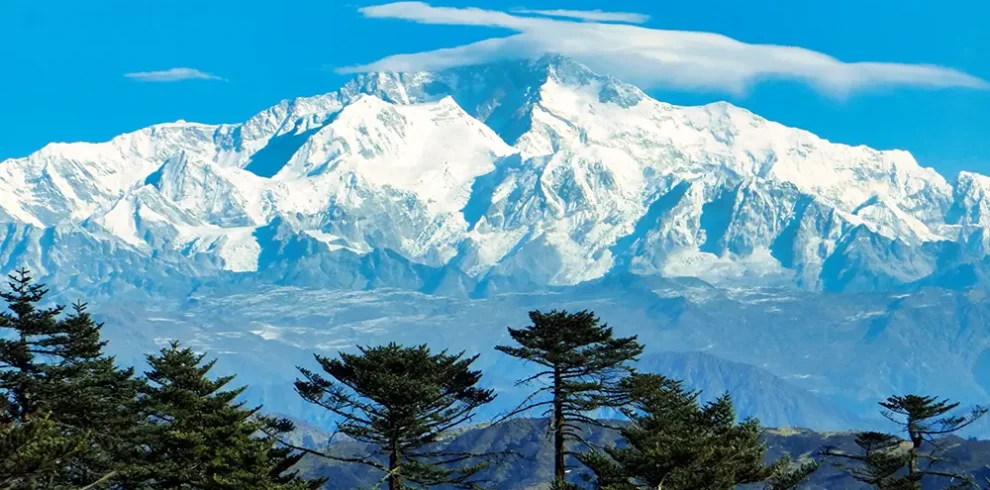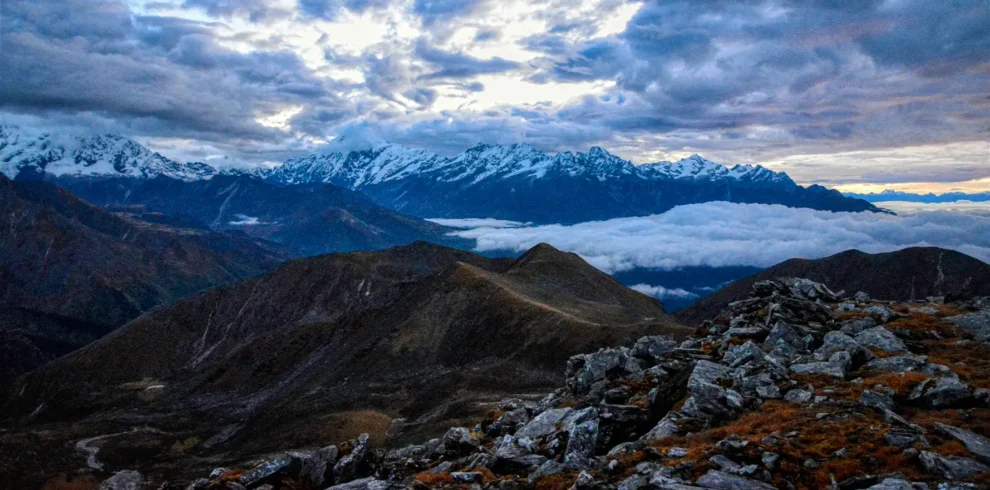
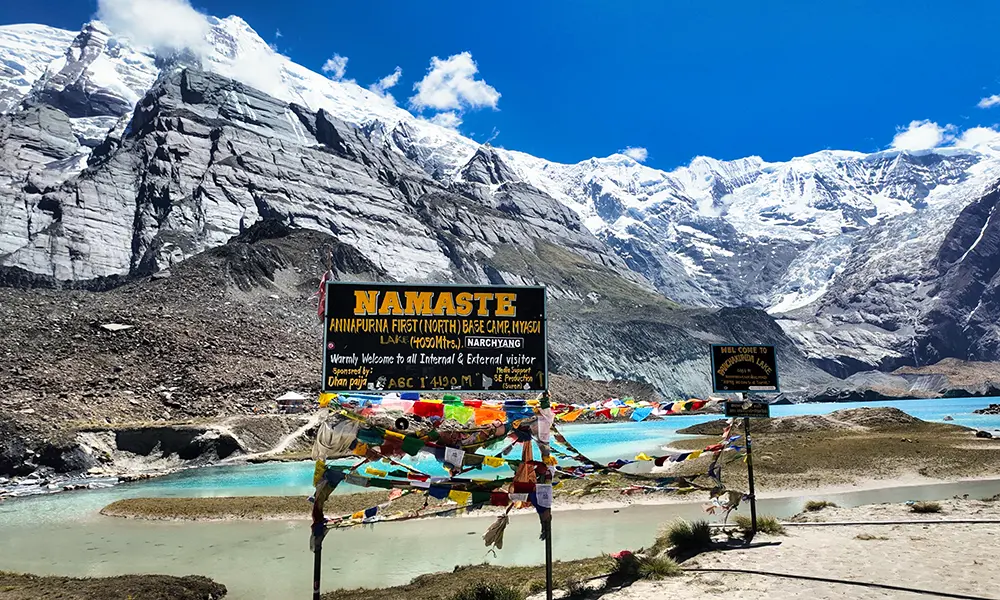
Annapurna Base Camp Trek takes you on foot into the Annapurna Sanctuary, a high mountain basin in Nepal surrounded by steep rock faces, hanging glaciers and some of the best-known peaks in the Himalayas. The walk begins in the inhabited green foothills above Pokhara and ends at Annapurna Base Camp (ABC), 4,130 metres, beneath Annapurna I, a mountain that rises to 8,091 metres.
The change in landscape is what stays with many trekkers. One day you are following stone paths between Gurung villages and terraced fields. Later, you walk beneath bamboo and rhododendron forests, beside the Modi Khola valley and finally into a broad, exposed mountain sanctuary where the scale of Annapurna South, Hiunchuli and Machhapuchhre becomes clear. Nothing on the regular route requires technical climbing, but the walking days, stone steps and high altitude should be taken seriously.
This 10-day, 9-night Annapurna Trek starts and ends in Pokhara. It follows the Ghandruk and Chhomrong approach, with planned overnight stops at Ghandruk, Chhomrong, Bamboo, Deurali, Machhapuchhre Base Camp and Annapurna Base Camp. Two shorter upper stages give trekkers more time to adjust to the altitude before reaching ABC. The descent returns through Bamboo and Jhinu Danda, with an optional hot-spring visit if the pools are open and the group has enough time.
This is a guided tea-house trek, not a jeep tour or a camping expedition. A vehicle is used to reach the lower trailhead and collect trekkers at the end. Between those points, you walk with a guide on marked mountain trails. Lodging is in local guesthouses and trekking tea houses; private bathrooms, heating and dependable Wi-Fi cannot be promised at higher elevations.
Annapurna Base Camp Trek at a Glance
Route: Pokhara → Ghandruk → Chhomrong → Bamboo → Deurali → Machhapuchhre Base Camp (MBC) → Annapurna Base Camp (ABC) → Bamboo → Jhinu Danda → Pokhara. Duration: 10 days and 9 nights. Highest elevation: 4,130 m / 13,550 ft. Walking: roughly 55–70 km in total, depending on the roadhead, permitted trail and lodge locations. Difficulty: moderate to challenging. Accommodation: one Pokhara hotel night, eight nights in mountain tea houses. Best general seasons: March–May and October–November.
Why Choose This Annapurna Trek Route?
Some Annapurna Base Camp itineraries climb from Deurali to ABC in a single day. Others include the Ghorepani and Poon Hill loop, adding more stair climbs and days before the sanctuary. We have chosen a direct Ghandruk approach with a separate overnight stop at Machhapuchhre Base Camp (around 3,700 m) before the final ascent to 4,130 m. That makes the upper part of the route easier to pace and helps avoid treating the final climb as a race.
There is no Poon Hill detour in the standard package. This itinerary stays focused on the Annapurna Sanctuary, the route that most people are looking for when they search for an Annapurna Base Camp Trek. If seeing sunrise from Poon Hill or exploring Ghorepani is a priority, request a longer extension rather than assuming it is included in these ten days.
Annapurna Base Camp Trek Route and Mountain Highlights
Ghandruk and Chhomrong: mountain villages before the sanctuary
Ghandruk is one of the well-known Gurung villages on the southern approaches to Annapurna. Stone lanes, hillside farms and village accommodation offer a gentler start than heading immediately for the high valley. From here, the trail crosses ridges and streams towards Chhomrong. The paths often descend only to climb again, so progress is measured in walking hours rather than a straight-line distance on a map.
Bamboo, Dovan and Deurali: a changing river valley
Above Chhomrong, the forested trail passes Sinuwa and Bamboo before continuing towards Dovan and Deurali. The surroundings become more enclosed beside the Modi Khola, and the trees gradually thin as the trail rises. In wet weather the steps and stones can be slippery; in colder weather, frost or ice may affect shaded sections. This is one of the reasons to carry footwear with reliable grip rather than ordinary trainers.
Machhapuchhre Base Camp: the gateway to the high basin
Machhapuchhre Base Camp sits at roughly 3,700 metres. Despite the name, the sacred summit of Machhapuchhre is not an ordinary climbing objective for trekkers. The tea houses here serve as a useful overnight stop on the route to ABC, with striking views up the surrounding valley when cloud and wind allow.
Annapurna Base Camp: close views of Annapurna I
At 4,130 metres the valley opens into the Annapurna Sanctuary. Around the basin you may see Annapurna I, Annapurna South, Hiunchuli and other peaks that rise sharply around the amphitheatre. Sunrise can be remarkable, but visibility is not guaranteed and clouds can reach the mountain walls quickly. The viewpoint and overnight area are accessible by normal trekking paths; do not approach glacier edges, avalanche debris or steep slopes for photographs.
Annapurna Base Camp Trek Difficulty and Fitness
This is not a technical mountaineering route, but it is still a substantial Himalayan trek. Several days involve five to seven hours of walking. The Chhomrong stairs and the climb towards Sinuwa are tiring in both directions, while the descent after ABC can be particularly hard on knees. Many paths include irregular steps, wet rocks, exposed slopes and narrow sections where groups must pass carefully.
Trekkers should prepare with regular walks on hills, longer hikes carrying a daypack, stair climbing and leg-strength work. Being able to walk for several hours at a steady pace matters more than moving quickly. A fit beginner may manage the route with realistic training and a suitable guide, but the package is not designed as a first experience of walking for multiple consecutive days without preparation.
The highest night is at 4,130 m, so acute mountain sickness is possible. Fitness does not prevent altitude illness. The route gains sleeping altitude gradually near its upper end, but extra time may still be necessary for some travellers. Persistent headache, nausea, unusual fatigue, dizziness or any more severe symptoms should be reported immediately to the guide; further ascent must stop when altitude illness is suspected. Descending and obtaining appropriate medical assistance take priority over completing the itinerary.
Best Time to Trek to Annapurna Base Camp
March to May: Spring brings new forest growth and flowering rhododendrons on parts of the lower trail. The weather can become warmer and cloudier later in the season. Higher up, snow or older avalanche deposits may remain even when the valleys below are green.
October and November: The post-monsoon period is often a strong choice for longer mountain views and comparatively settled trekking weather. Nights at Deurali, MBC and ABC can still be very cold. Popular tea houses may be busy, so arrangements should be made ahead of time.
Winter and monsoon: Snow, ice and avalanche exposure can alter access above Deurali in winter or early spring. Heavy rain during the monsoon can mean slippery steps, poor visibility, swollen streams and road delays. Departures outside the main trekking months require extra flexibility; there is no month when the upper route is guaranteed open or free of hazards.
Annapurna Base Camp Trek Cost
The indicative starting price is ₹69,999 per person for two guests travelling together with a privately arranged trekking guide and sharing accommodation where available. It is an initial planning estimate for the 10-day Pokhara-to-Pokhara trip, not a confirmed supplier tariff. The proposed scope includes one hotel night in Pokhara, eight tea-house nights, specified trail meals, private road transfers to and from the trailhead, local guide support and standard Annapurna Conservation Area/TIMS arrangements as required for each traveller.
The final quotation depends on travel dates, available lodges, nationality and permit charges, guide arrangements, currency movements and whether you want a porter. Extra porter support, private rooms where possible and additional trekking days can be priced separately. Rates for larger groups may be lower per person because guide and transport costs are shared. Flights or road travel between Kathmandu and Pokhara are not included in this Pokhara-based rate.
Go Wild Expedition is based in Sikkim, India. Services inside Nepal must be confirmed through an appropriately registered Nepal trekking provider. Nepal guiding, permits, trailhead transport, accommodation and the final quotation are therefore subject to local supplier confirmation before a booking is accepted. We do not present an unverified Nepal operating arrangement as already secured.
Annapurna Base Camp Permit and Guide Information
The Annapurna Sanctuary lies inside the Annapurna Conservation Area. The ACAP entry permit is a separate requirement from the TIMS trekking registration used on designated routes. The National Trust for Nature Conservation’s current official permit service lists an ACAP fee of NPR 1,000 for SAARC nationals and NPR 3,000 for other foreign nationals, including tax. Rules and fees may change, and any online processing charge or traveller-specific exemption must be checked when arrangements are made.
Nepal Tourism Board’s current guidance identifies designated Annapurna routes, including the Poon Hill–ABC trek, for licensed-guide and agency-issued TIMS arrangements. The exact documents and TIMS process should be confirmed for the chosen route and nationality with a Nepal-registered trekking agency. For direct reference, consult NTNC’s official ACAP e-permit guidance and Nepal Tourism Board’s TIMS information. This package assumes compliance with the requirements in force at departure rather than relying on an old online permit checklist.
Tea Houses, Meals, Water and Electricity
Accommodation on this Annapurna Trek is generally in small mountain tea houses. At the lower villages, you may find comfortable shared or private rooms. As you climb to Deurali, MBC and ABC, available rooms tend to be more basic; shared bathrooms, cold nights and limited charging facilities are common. Private rooms cannot be guaranteed during busy periods, and there are no normal hotel facilities at base camp.
Meals on the walking days are usually prepared at the lodges and often include dal bhat, cooked vegetables, potatoes, noodles, soups and porridge. Vegetarian options are widely available, though menus become smaller and prices higher as supplies have to be carried uphill. Trekkers should tell the organiser about food allergies well in advance, carry a refillable bottle and use a suitable filtration or treatment method rather than assuming every tap is safe to drink.
What to Pack for the Annapurna Trek
Pack broken-in trekking boots or trail footwear suitable for rough steps, spare socks, a moisture-wicking base layer, warm fleece, insulated jacket, waterproof outer layer, gloves, warm hat, sun hat, sunglasses, headlamp, personal medication and a refillable bottle. Trekking poles can make the long descent more comfortable. A warm sleeping bag may be useful, especially above 3,000 metres; the exact rating depends on the month and accommodation.
Carry only what you can manage comfortably if you are trekking without a porter. If a porter is requested, the operator should confirm a humane weight limit and the exact baggage arrangement before departure. Charging and mobile networks may be intermittent, so a permitted power bank and offline emergency contact details are useful.
How to Reach Pokhara for the Annapurna Trek
This package begins with an arrival in Pokhara, the common gateway to the Annapurna foothills. International travellers frequently arrive in Kathmandu first and then travel to Pokhara by domestic flight or road. Domestic flight times, road journey durations and seasonal disruptions vary, so allow a buffer when planning international connections. Kathmandu accommodation and Kathmandu–Pokhara transport can be arranged in a separate quotation rather than silently added to the base price.
Annapurna Base Camp Trek vs Annapurna Circuit Trek
They are different journeys. Annapurna Base Camp Trek leads into the Annapurna Sanctuary and finishes at 4,130 m. The longer Annapurna Circuit Trek travels around much of the massif, typically crossing Thorong La Pass at about 5,416 m, and needs a different amount of time and high-altitude preparation. This package is specifically for Annapurna Base Camp; Thorong La, Manang, Tilicho Lake and the full circuit are not part of it.
If you are comparing Nepal with shorter Himalayan walking holidays closer to India, our Sandakphu Trek follows the Singalila Ridge in Darjeeling. The Trekking activity collection includes routes from Sikkim, Darjeeling and Nepal.
Trip Facts
-
Pokhara 1N · tea houses 8N
-
ACAP & TIMS per quote
-
Pokhara, Nepal
-
Mar–May · Oct–Nov
-
Pokhara, Nepal
-
Local licensed trekking guide
-
Not included
-
English; confirm on booking
-
ABC · 4,130 m
-
Trail meals · Pokhara breakfast
-
Pokhara hotel
-
Seasonal · trail dependent
-
Road transfers + trekking
-
2–8 h on trekking days
-
Unreliable above villages
Annapurna Base Camp Trek Overview
Walk into Nepal’s Annapurna Sanctuary on a 10-day, 9-night Annapurna Base Camp Trek, starting and ending in Pokhara. The route passes Ghandruk, Chhomrong, Bamboo and Deurali before staying at Machhapuchhre Base Camp (about 3,700 m) and Annapurna Base Camp (4,130 m).
The proposed itinerary has one hotel night in Pokhara and eight nights in simple trekking tea houses. The walking section is on foot with a qualified local guide; road transfers are limited to the lower trailhead and return journey. A separate overnight stop at MBC gives the group more time on the upper approach rather than rushing directly from Deurali to ABC.
The published price is an indicative estimate for two people on a privately arranged guided trip. Nepal ground services, guide availability, accommodation and permit arrangements must be confirmed through a registered Nepal operator before accepting a booking. This is the Annapurna Base Camp route, not the Annapurna Circuit or the Ghorepani–Poon Hill extension.
Trek Highlights
- Reach Annapurna Base Camp at 4,130 metres on foot
- Close-range Annapurna Sanctuary mountain scenery
- Extra night at Machhapuchhre Base Camp before ABC
- Traditional village paths around Ghandruk and Chhomrong
- Rhododendron and bamboo forests above the Modi Khola
- Tea-house trekking with local meals and mountain lodges
- Full sunrise opportunity at Annapurna Base Camp
- Long, scenic descent towards Bamboo and Jhinu Danda
- Optional hot springs near Jhinu, subject to access
- Pokhara arrival, trailhead transfers and return road travel
- Guided itinerary focused on ABC, not the Annapurna Circuit
- Detailed altitude, permit and fitness information
Trip Reviews
No reviews yet. Be the first to share your experience!
Share Your Experience
Rate each aspect of your trip and leave your feedback below.