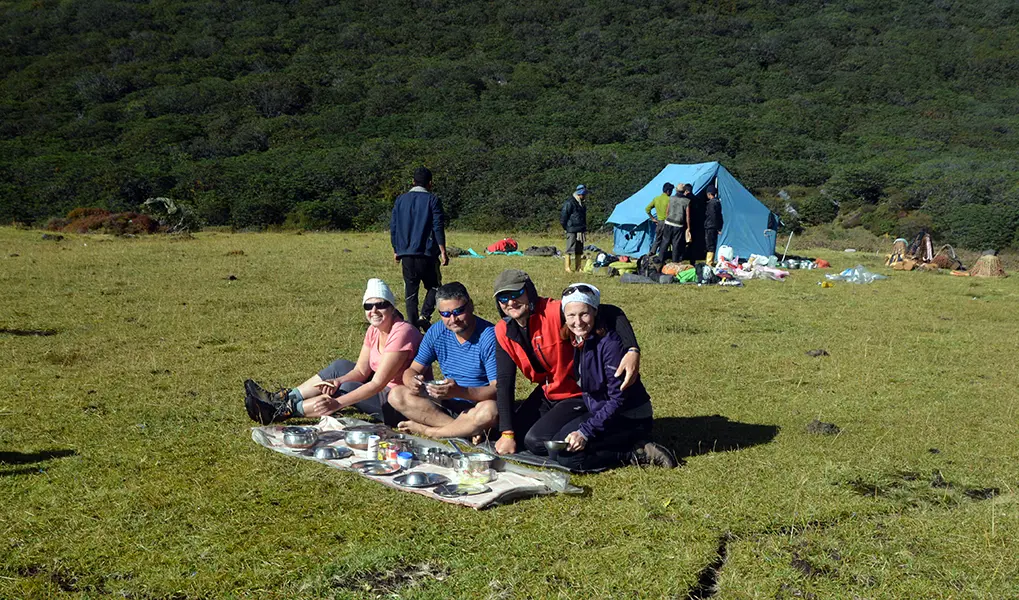
Sikkim trek meals are prepared by experienced mountain cooks who turn carefully planned supplies into fresh, warm and satisfying food, even at campsites several days away from the nearest village.
On supported high-altitude treks in Sikkim, guests rely on the expedition kitchen rather than restaurants or roadside food stalls. The travel agent purchases supplies before departure; the cook and helpers prepare the meals at mountain camps.
A skilled mountain cook can prepare much more than rice, dal and vegetables. Depending on the shopping list, guests may enjoy oats, pancakes, bread with jam or honey, chapatis, fried rice, pasta, noodles, soups, pakoras, popcorn, fruit and freshly prepared desserts. The dishes change with the cook’s skills, the supplies and the agreed meal budget.
Garlic soup and popcorn are also familiar parts of high-altitude trekking traditions in the Sikkim Himalayas.
Meat is not part of our trekking meals once the group leaves Yuksom or Uttarey for the remote trail. The camp kitchen follows a vegetarian menu, with eggs served in selected meals. Very rarely, a company may include a sealed tin of fish in its own provisions, but canned fish is not part of the regular menu and guests should never expect or request it.
This guide explains how food is arranged, what you can expect for breakfast, lunch and dinner, why trekking meals are vegetarian, how drinking water is provided and how the cooking team prepares a varied menu in the mountains.
How Food Is Arranged for High-Altitude Treks in Sikkim
Preparing meals for a Himalayan trek begins well before the trekkers reach their first campsite.
Before departure, the company prepares a shopping list according to the number of trekkers, the duration of the trip, their dietary needs and the meal arrangements agreed at booking. The same kitchen system is used across our supported high-altitude routes.
The provisions can include rice, flour, dal, potatoes, vegetables, oats, bread, jams, honey, milk or milk powder, eggs, noodles, pasta, tea, coffee, drinking chocolate, biscuits, cooking ingredients and fruit when practical. Meat is not purchased for trekking meals.
The cook plans combinations of dishes and portions so the food lasts throughout the journey, using fresh supplies earlier and longer-lasting ingredients when appropriate.
An agreed basic meal plan normally covers the essential cooked meals. When a group has chosen a higher food budget or additional catering services, the company may plan more dishes, extra fruit, sweets or refreshments. This is not an automatic promise for any named package tier: the confirmed quotation governs what is included.
Once the trek begins, the food and kitchen equipment are transported by the support team, using porters or pack animals according to the route and permitted arrangements.
After reaching camp, the cook and kitchen helpers prepare the meals.
There are no supermarkets beyond the remote trekking camps. Missing ingredients cannot simply be purchased along the way. Careful shopping and planning are therefore essential.
Why the Cook’s Experience Matters
Cooking at high altitude requires more than knowing a few recipes.
A good expedition cook understands how to manage ingredients, fuel, preparation time and food storage while maintaining variety throughout the trek.
The facilities are very different from a household kitchen. Cooking is usually done with portable stoves and utensils inside a temporary camp kitchen.
At higher elevations, the lower atmospheric pressure means water boils at a lower temperature. Some foods, particularly those requiring prolonged boiling, can take longer to cook.
Cold weather, wind and limited supplies add to the work.
Despite these challenges, an experienced cook can prepare fresh meals and several different dishes, including desserts.
This is why the standard of food on two treks can differ even when both operators carry similar ingredients.
The menu depends not only on the shopping list, but also on the ability and experience of the cooking team.
What Meals Are Served During a Sikkim Trek?
Supported high-altitude treks generally follow a routine of breakfast, lunch, evening refreshments and dinner.
Tea, coffee, soup and snacks may also be served at different times, depending on the day’s programme.
The following examples reflect the types of food commonly planned by trekking kitchens. They are not a fixed menu for every departure.
Breakfast in the Mountains
Breakfast is usually served before the group begins walking.
Breakfast can include oats or porridge, chapatis, bread with butter, jam or honey, omelettes, pancakes, cornflakes, fried rice or other dishes that the cook prepares from the supplies.
Tea, coffee and hot chocolate may be available according to the agreed provisions. Eggs are served only in meals where they have been planned.
A warm breakfast is useful before a cold morning’s walk, but the menu need not be identical from day to day.
The choices depend on the time available, the ingredients and the cook’s planned menu.
At high camps, a hot breakfast is especially welcome before setting out into the cold.
Some trekking teams also serve early morning tea before breakfast, allowing guests to begin the day with a warm drink.
Lunch During Trekking Days
Lunch arrangements change according to the distance and difficulty of the day’s walk.
When the route and timetable permit, the cooking team may prepare a hot lunch.
This could include rice, dal, chapati, vegetables, potatoes, noodles or other dishes.
On longer walking days, a packed lunch may be more practical.
The cook prepares food that can be carried and eaten at a suitable stopping point along the route.
This is particularly useful when the group needs to cross a long section of forest, climb towards a high campsite or descend without stopping for a full cooking session.
The food may be simpler than a campsite lunch, but it remains part of the planned trekking meals.
Evening Tea, Soup and Snacks
After reaching a campsite, trekkers often look forward to a hot drink and something light to eat.
Tea, coffee, soup and biscuits are common choices.
Depending on the day’s menu, the cook may also prepare pakoras, popcorn, sandwiches, French fries or other snacks.
Garlic soup is particularly familiar on high-altitude trekking routes in Sikkim.
These refreshments are not intended to replace dinner. They are served while trekkers settle into camp, rest and wait for the evening meal.
A cup of hot tea with freshly prepared popcorn can be one of the most enjoyable moments after a demanding climb.
Dinner at the Campsite
Dinner is generally the main cooked meal of the evening.
Rice, dal, chapati and vegetable dishes are common, but they do not have to be repeated in exactly the same form every night.
A cook might prepare rice with different vegetable curries one evening, followed by pasta or macaroni with soup on another.
Depending on the ingredients and the cook’s skills, dinner may include chowmein, noodles, fried rice, chapatis, potatoes, soups, sandwiches or other suitable preparations.
Vegetarian momos and similar dishes may also be possible when the cook has planned the ingredients and preparation time.
A well-organised kitchen provides variety by changing dishes, combinations and cooking styles.
This is particularly appreciated during longer treks, when guests spend several consecutive nights in tents.
Sweet Dishes and Fruits After Meals
Dessert is another part of mountain cooking that many general trekking articles overlook.
Depending on the menu, the cooking team may prepare custard, rice pudding, other simple sweet dishes or fruit-based desserts.
Fresh fruits such as oranges, apples or other suitable seasonal produce may also be served when they are available and can be transported safely.
Fruit salad is another possible dessert, particularly when fresh ingredients remain available.
An experienced cook can use the supplies creatively and offer a pleasant variety of sweets over several days.
These are examples of possible dishes, not a promise that every dessert will appear on every trek.
Fresh fruit availability may decrease as the journey continues into remote areas, while ingredients that store well become more useful.
The quality of meal planning lies in maintaining variety without exhausting essential supplies before the trek ends.
A Sample High-Altitude Trekking Menu
This is an illustration of the menu variety a capable mountain cook may provide, not a list of guaranteed dishes. The actual shopping list and meal budget determine what is available.
A cook may prepare different combinations of these foods as the trek progresses.
Actual menus vary with the group, length of the trek, ingredients and kitchen arrangements.
Why Our Trekking Kitchens Do Not Serve Meat
Once a supported trek leaves Yuksom or Uttarey for the remote mountain trail, meat is not provided. It is not on the regular shopping list, is not carried as a trekking meal and cannot be ordered at a campsite, including on private departures. The menu is vegetarian, though eggs may be served.
The occasional sealed tin of fish is an extremely rare provision that an operator might arrange independently. It is not a normal non-vegetarian meal service or an option guests should count on.
Cooking, Storage and Digestion at Altitude
The no-meat practice reflects mountain cooking experience. Trekkers often have reduced appetite or stomach discomfort as they climb. Trek-leader training and local kitchen practice favour familiar, lighter meals instead of rich meat dishes during these physically demanding days.
Raw meat also needs careful handling and refrigeration, neither of which is easy on long remote treks. Cooking meat thoroughly can require more time and fuel in high camps, where water boils at a lower temperature.
Rice, dal, chapatis, potatoes, vegetables, eggs where arranged, soups, breads and pasta give an experienced cook many ways to prepare tasty and nourishing meals. The aim is variety and food that guests can comfortably enjoy.
Garlic Soup and Popcorn: Traditional High-Altitude Foods
Garlic soup and popcorn have an established place in Sikkim’s high-altitude trekking culture.
Experienced local guides and cooks have served and recommended these foods over generations.
Garlic soup is valued for its warmth, flavour and traditional association with helping trekkers feel comfortable at higher elevations.
Garlic also contains naturally occurring sulfur compounds, including allicin, which have attracted research interest for their antioxidant and cardiovascular properties.
Popcorn provides carbohydrates and is convenient to transport and prepare. Corn is a familiar part of mountain food traditions, and a serving of popcorn makes a welcome snack during cold evenings.
These foods have practical and cultural value. Their continued use reflects the experience of mountain communities and trekking cooks.
They are part of the broader trekking routine, alongside meals, rest and appropriate acclimatisation.
If someone develops serious altitude-related illness, however, the guide must assess the situation and arrange appropriate assistance or descent.
Read our Altitude Sickness in Sikkim guide for information about recognising altitude-related symptoms.
Drinking Water at Mountain Campsites
Established campsites on these trekking routes have water sources used by the trekking teams. The cook or support staff collects water from suitable sources, boils it and provides the boiled drinking water to trekkers. Guests do not need to assume that untreated stream water is safe to drink.
Bring a Bottle That Can Hold Hot Water
Because drinking water may be supplied while still hot, bring a reusable bottle specifically rated to hold hot or freshly boiled water. A stainless-steel flask or suitable heat-resistant bottle is useful. Do not pour boiling water into an ordinary bottle that is not designed for it.
If You Refill Directly From a Cold Water Source
Trekkers who prefer cold drinking water may refill directly from a suitable natural water source along the trail or near camp, where the guide confirms access. This water has not been boiled by the camp staff and must be purified before drinking. Bring your own portable UV water purifier or suitable drinking-water purification tablets, and use them according to the manufacturer’s instructions. UV treatment requires clear water, so cloudy water must be clarified or filtered first. Purification tablets need the recommended contact time.
The two arrangements are separate: at camp, staff provide boiled water; anyone choosing to collect cold water straight from a natural source is responsible for treating it with their own purification equipment. Do not assume untreated stream water is safe just because it looks clear.
Carry enough water between refills, drink regularly during walks and do not force excessive amounts. Tea, soups and other camp drinks also contribute to your fluid intake.
Food on Long and Early-Morning Trekking Days
The normal meal schedule may change when a trekking day begins unusually early or requires many hours of walking.
On the Goechala Trek, for example, the group may depart from Lamuney well before sunrise to reach Viewpoint 1.
At that hour, a full breakfast may not be convenient.
The cooking team may instead arrange a warm drink or lighter food before departure.
Snacks or packed food can be carried during the walk, while a larger meal may be prepared when the group returns to camp.
The arrangement depends on the itinerary and the cook’s plan.
Similar adjustments may be needed during long walking days on the Uttarey Singalila Circuit Trek.
The important thing is to match the meals to the day’s activity rather than insist on the same timetable at every campsite.
Can Special Diets Be Arranged?
Food preferences should be communicated before the trek begins.
Once the provisions have been purchased in Yuksom or another starting location, making major changes to the menu becomes difficult.
Vegetarian meals are the standard throughout our supported routes. Eggs can be included in some meals when planned. Meat cannot be requested, even as a special arrangement.
Jain food may also be arranged on request, provided the cooking team has advance notice of the specific restrictions.
Vegan preferences, mild-food requests and other dietary requirements should be discussed before the shopping list is finalised.
Food allergies require particular attention because remote trekking kitchens use shared equipment and have limited opportunities to obtain substitute ingredients.
Do not assume that every special diet can be accommodated without prior planning.
What Food Should Trekkers Carry Personally?
Guests on a supported trek generally do not need to carry ingredients for their main meals.
However, bringing a few personal snacks is useful.
You may prefer dry fruits, nuts, biscuits, roasted chana, energy bars or another familiar food.
These can be convenient during long climbs, when you want a small snack before the next planned meal.
Carry only a sensible quantity. The expedition team is already transporting the provisions needed to feed the group.
Do not pack meat or meat-containing food to take into the trekking area. The no-meat rule applies once the trek begins.
For other essentials, see our Sikkim Trek Packing List.
Frequently Asked Questions About Sikkim Trek Meals
Are meals freshly cooked at the campsites?
Yes. The cook and kitchen team prepare meals from supplies purchased before the trek and transported to the camps.
Does everyone get the same menu?
The meal routine is similar across routes, but dish choices depend on the cook, group size, available supplies and the food budget agreed with the company. Higher agreed catering budgets may allow more variety and additional treats.
Are meals limited to rice, dal and vegetables?
No. An experienced cook may prepare oats, bread and jam, pancakes, chapatis, noodles, pasta, soups, snacks and desserts according to the provisions.
Is meat available if I pay extra?
No. Meat is not a menu option once trekking starts from Yuksom or Uttarey. Some meals may include eggs. Rare operator-planned canned fish, if any, is not an advertised or guaranteed option.
Is hot drinking water provided?
Yes. Water from suitable sources around campsites is boiled by the cooking team and supplied to guests. Bring a bottle rated for hot water.
Can I Fill My Bottle With Cold Water From a Natural Source?
Yes, where a suitable water source is accessible. That water is untreated, so purify it before drinking with your own portable UV purifier or appropriate purification tablets, following the product instructions. Camp staff separately provide boiled drinking water.
Can Jain, vegan or low-spice meals be arranged?
Discuss your requirements before booking so the shopping list and cooking arrangements can be planned. Some specialised diets and strict allergy controls may be difficult in a shared remote kitchen.
Good Mountain Food Depends on Planning and a Skilled Cook
One of the pleasures of trekking in Sikkim is sitting down to a freshly prepared meal after a long day in the mountains.
It may be a simple lunch, a warm bowl of garlic soup, freshly cooked chapatis or a dessert prepared with the supplies carried from Yuksom.
The experience depends on thoughtful shopping, good food management and the skill of the cook.
At Go Wild Expedition, the camp kitchen follows a vegetarian meal plan on the remote trekking trails, with eggs included in selected dishes. Meat is not supplied during the trek. The shopping list and menu variety depend on the group’s agreed services and the cook’s arrangements.
We encourage guests to share their dietary preferences before departure so the food supplies and menu can be planned accordingly.
The mountains may be remote, but that does not mean the meals must be dull or repetitive. With a capable cooking team, every campsite can offer something enjoyable to look forward to.