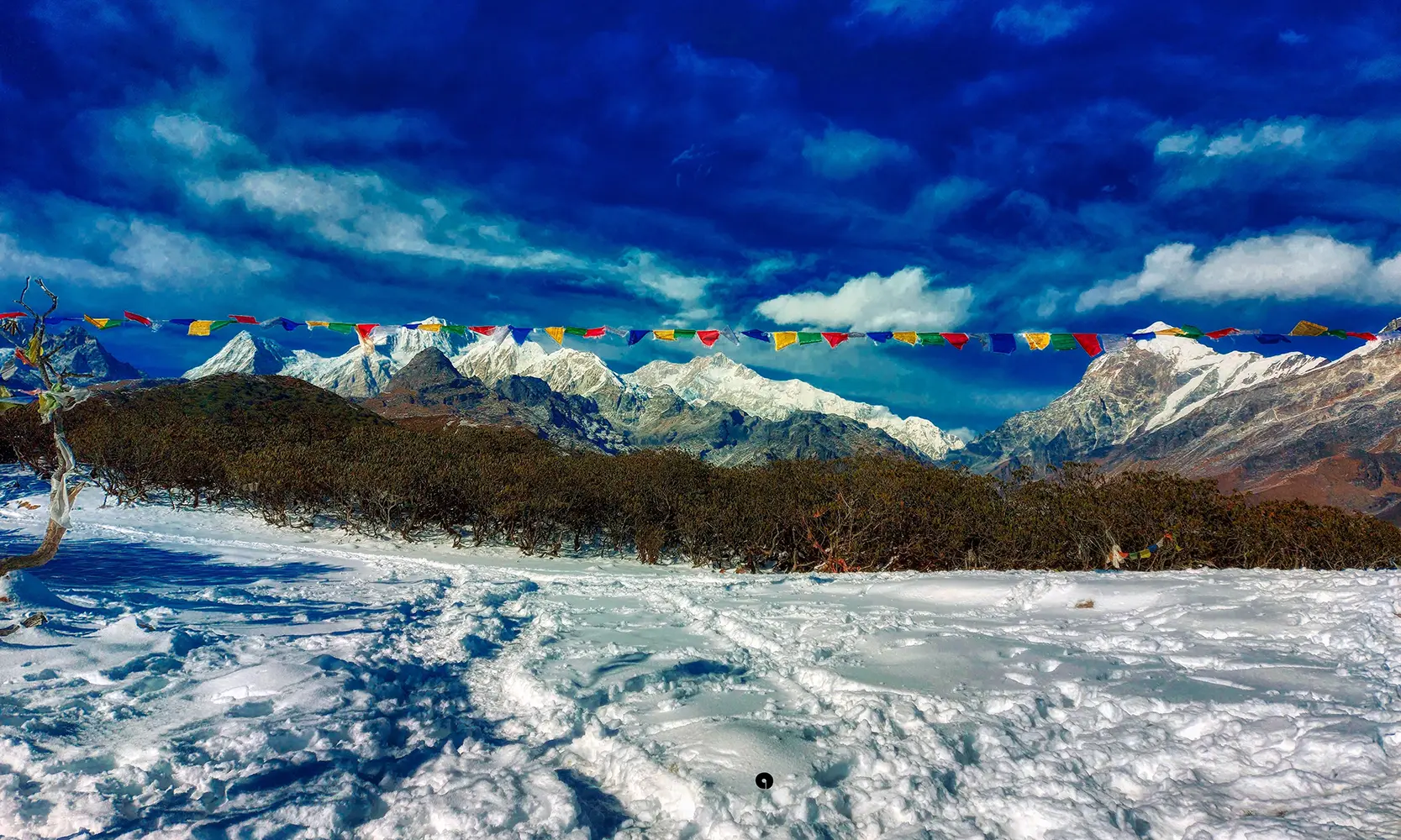
Dzongri Trek starts in Yuksom, West Sikkim, and climbs through deep forest to an open mountain ridge with views of Kanchenjunga. From Dzongri Top, around 4,200 metres above sea level, you can see the snowy peaks of Kabru, Pandim and Rathong when the sky is clear. Our eight-day plan includes six walking days, a night before the trek and a departure day.
The first part of the route feels almost sheltered. A narrow path follows the river valley beyond Yuksom, crosses streams and climbs through oak and rhododendron forest towards Sachen and Tshoka. Above Phedang, the trees begin to thin. By the time you reach Dzongri, the trail has changed into open high mountain country, and the cold air makes every step feel different.
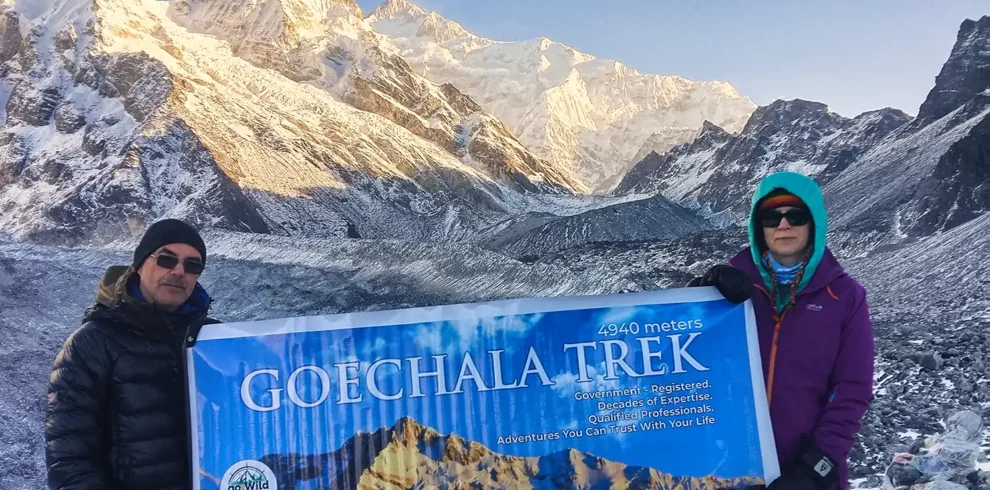
This is the shorter alternative to our Goechala Trek package, but it is not an easy shortcut. The steep climb from Tshoka to Dzongri and the sleeping altitude near 4,000 metres require good fitness and a steady pace. We keep a second night at Dzongri so there is time for the sunrise viewpoint and some rest before the return walk.
Go Wild Expedition plans this journey from Yuksom with local guides, a camp kitchen and the support needed for the route. The estimated Indian price starts near ₹19,000 per person in a group of ten or more and can reach ₹60,000 or more for one guest on a supported private trek. The package details below explain why these rates differ and what to check before you request a booking.
Trip Fact
-
Shared camping tents on the trail; Yuksom room only if quoted
-
Trekking permit and park charges as agreed in written quote
-
Yuksom, West Sikkim
-
Usually March to May and October to November, subject to conditions
-
Yuksom, West Sikkim
-
Refer to booking and refund policy
-
Experienced local trekking guide
-
Only when included in confirmed quote
-
Not included; arrange personal trekking and rescue cover
-
English, Hindi, Nepali
-
Dzongri Top, approx. 4,200 metres
-
Simple camp meals during trekking days; dietary needs on request
-
Yuksom, unless otherwise agreed
-
Bring refillable bottles; follow water-treatment guidance
-
UPI, bank transfer or cash as agreed
-
Seasonal, on request; dates subject to confirmation
-
Road transfers quoted separately unless included
-
Typically 4–8 hours per walking day
-
Do not rely on service or charging beyond Yuksom
-
14
-
65
Dzongri Trek Overview
Why choose the Dzongri Trek?
Not everyone has the time for the full Goechala route. Dzongri lets you experience the same opening trail, from the green forests above Yuksom to the wide meadows near 4,000 metres, without continuing on to Thansing and Lamuney. The reward comes at Dzongri Top. On a clear morning, Kanchenjunga appears across the eastern Himalayan skyline, with Pandim, Kabru and other high peaks around it.
The changing landscape is just as memorable as the viewpoint. At lower elevations, you walk beneath moss-covered trees and over bridges above rushing water. Around Tshoka, rhododendrons can flower in spring. Above Phedang, the forest gives way to shorter plants and open slopes. You feel the shift in altitude long before you reach the highest point.
The trail lies in Khangchendzonga National Park, part of a UNESCO World Heritage Site known for both its mountain landscape and its cultural importance. The route is special enough without promises of rare animal sightings or guaranteed perfect weather.
Dzongri altitude and difficulty
Dzongri camp lies around 3,950 to 4,030 metres, while Dzongri Top is roughly 4,200 metres. Starting at Yuksom, the journey gains more than 2,000 metres of height in just a few walking days. The climb from Tshoka to Dzongri is the hardest uphill section for many travellers. Expect a long ascent through Phedang and exposed slopes, where the air is thinner and the wind can be cold.
This trek does not require rope climbing or mountaineering skills in normal conditions. It does require stamina, balance on uneven ground, and the ability to walk for several hours with a daypack. We recommend training with long uphill walks before travelling. Previous multi-day hiking experience is helpful, especially if you have never slept near 4,000 metres.
Altitude sickness is a real concern. We have kept a second night at Dzongri for the viewpoint and to avoid rushing back immediately after the climb. Rest days do not guarantee safety. Tell your guide about a headache, nausea, dizziness, unusual weakness or breathlessness. Reaching the viewpoint is always subject to your health, weather and the guide’s judgement.
Dzongri Trek route and return journey
The standard trail follows Yuksom → Sachen → Bakhim → Tshoka → Phedang → Dzongri → Dzongri Top. After the viewpoint day, we return by the same main corridor through Phedang and Tshoka. Unlike the full Goechala Trek, this package does not continue from Dzongri towards Kokchurung, Thansing, Lamuney or Goechala Viewpoint 1.
We use six days on the trail so the group can camp at Sachen on the way up and spend a second night at Dzongri. Faster itineraries exist, but they should not be treated as a safer choice just because they take fewer days. Your arrival and departure road journeys are listed separately in the itinerary below.
Best time to visit Dzongri
Spring, usually March to May: The forest can be full of rhododendron flowers. Higher sections may still hold snow, and clouds can build during the day. Autumn, usually October to November: Clear post-monsoon mornings often offer excellent mountain views, though nights at Dzongri become very cold. The upper route can be affected by snowfall in either season.
Heavy monsoon rain makes the lower trail wet and slippery, while winter requires a different level of cold-weather preparation and may not be suitable for normal departures. Choose your dates for conditions, not simply a calendar promise. Our Best Time to Visit Sikkim explains the wider seasonal picture.
Dzongri Trek cost in 2026
Our planning reference is from ₹19,000 per person for an Indian group of 10 or more, while a private supported departure for one Indian trekker may cost ₹60,000 or more. Groups between these sizes need a separate quote. These are estimated service prices, not universal park rates or a promise that any date can be booked for the minimum amount.
Why such a wide range? A local guide, cook, camping tents, food, fuel and the transport of expedition supplies are needed whether one guest travels or ten. In a larger group, the shared cost is divided among more people. Smaller departures need a higher per-person budget to maintain the same practical support.
International trekkers: Please request a separate quotation. Nationality can affect the permitted route, documentation and applicable park charges. We will confirm eligibility and costs before accepting a booking. Park-related fees and operational expenses have changed in recent years, so older low-cost quotes should not be treated as current.
The package prices shown here are planning estimates. Send us your month, nationality, number of trekkers and required services for a final written quote. We will confirm what is included before you make any advance payment.
Camping, meals and facilities
There are no road-accessible hotels along the trekking route after Yuksom. We use camps on the trail, with tents and a cooking team as specified in the quotation. Expect simple, warm food prepared for the group rather than restaurant choices. If you have food allergies or a special diet, tell us well before departure so we can confirm what is possible.
Carry refillable bottles and follow the guide’s instructions for treating water. Do not depend on a mobile signal, charging points or reliable internet once you leave Yuksom. The weather can turn cold and wet quickly, so dry layers, waterproof clothing, gloves and a headlamp are essential.
Reaching Yuksom and preparing for departure
Bagdogra Airport, New Jalpaiguri railway station and Siliguri are common gateways. From there, you travel by road to Yuksom in West Sikkim. The drive can take most of the day, and mountain road delays are possible. Arrive early enough for a gear check and a briefing. Avoid arranging an onward flight or train too soon after the return drive.
Park registration and travel documents must be arranged for your nationality and departure date. We will confirm the documentation and required guide arrangements before the trip. Guided support is included in our organised departures; a one-person private package still means one traveller accompanied by the necessary local trekking team, not an unsupported solo hike.
Why plan Dzongri with Go Wild Expedition?
Our base in Yuksom puts us at the start of the trail. We can discuss real walking days, group size, staff support and the practical difference between a shared departure and a private journey before you travel. We would rather give you a clear estimate and explain what affects it than promise a low headline price that does not cover the trek you expect.
To enquire: Tell us your expected dates, passport nationality, total group size and past trekking experience. We will help you choose the right departure, confirm availability, and explain the final price and inclusions. Views, weather and reaching Dzongri Top cannot be guaranteed.
Dzongri Trek Highlights
- Sunrise viewpoint at Dzongri Top, approximately 4,200 metres, with wide mountain views in clear weather
- Two nights at Dzongri, including time for rest and an optional dawn viewpoint walk
- Forests, stream bridges and high rhododendron trails from Yuksom via Sachen and Tshoka
- The demanding ascent through Phedang into open Dzongri alpine meadows
- Six walking days within an eight-day programme that includes arrival and departure
- Local team support and camping arrangements starting from Yuksom
- Clear estimates for large groups and private one-person departures
- A shorter alternative to Goechala without the additional camps at Thansing and Lamuney
Trip Reviews
No reviews yet. Be the first to share your experience!
Share Your Experience
Rate each aspect of your trip and leave your feedback below.